
From Rock City to Country Houses How Nottingham’s Live Music History Filters Into Weddings
Message usNottingham’s relationship with live music is unusually direct. It is a city where people expect to hear real instruments in real rooms, often at close range, and that expectation did not disappear when weddings moved into barns, halls, and restored estates. It simply travelled with them. The habits formed in standing crowds and tight venues now surface quietly during first dances and evening sets, shaping how live bands are received and what guests respond to instinctively.
For decades, Nottingham audiences have been used to performance that feels immediate rather than polished to a sheen. Local music culture has favoured connection over spectacle. Even in larger rooms, the emphasis has been on sound that fills the space without flattening it. That sensibility carries into weddings held at country houses on the edge of the city, where guests might step out onto gravel terraces or across lawns before returning indoors to hear a band work the room properly. The expectation is not perfection, but presence.
This history also explains why Nottingham wedding crowds tend to engage early. In a city where live gigs are part of everyday cultural life, people know how to behave when a band starts playing. They look up. They listen. They decide quickly whether the music speaks to them, and if it does, they commit. At weddings, that often means the dancefloor fills sooner than couples expect, even when the room itself is formal or the surroundings lean traditional.
There is a contrast here that defines the region. Nottingham weddings often take place in settings that suggest restraint: long driveways, formal dining rooms, measured service. Yet once the evening music begins, the response can be surprisingly physical. Hands come up, shoes come off, ties loosen. This is not contradiction but continuity. The city’s live music culture has always existed alongside its heritage spaces, not in opposition to them.
Bands performing regularly in the area understand this balance. They know that a wedding at are stored hall outside South well or along the A52 corridor does not call for theatrical excess. What matters is timing, touch, and an ability to read a crowd that includes both habitual gig goers and relatives who have not stood near a stage in years. Songs are chosen for how they land in the room rather than how they look on a setlist.
This influence is also audible in volume choices. Nottingham audiences are sensitive to sound that overwhelms. The city’s venues, both historic and modern, reward control. At weddings, this results in bands that play with dynamics rather than simply pushing louder as the night progresses. Quiet moments are allowed to breathe. Choruses arrive with intention rather than force.
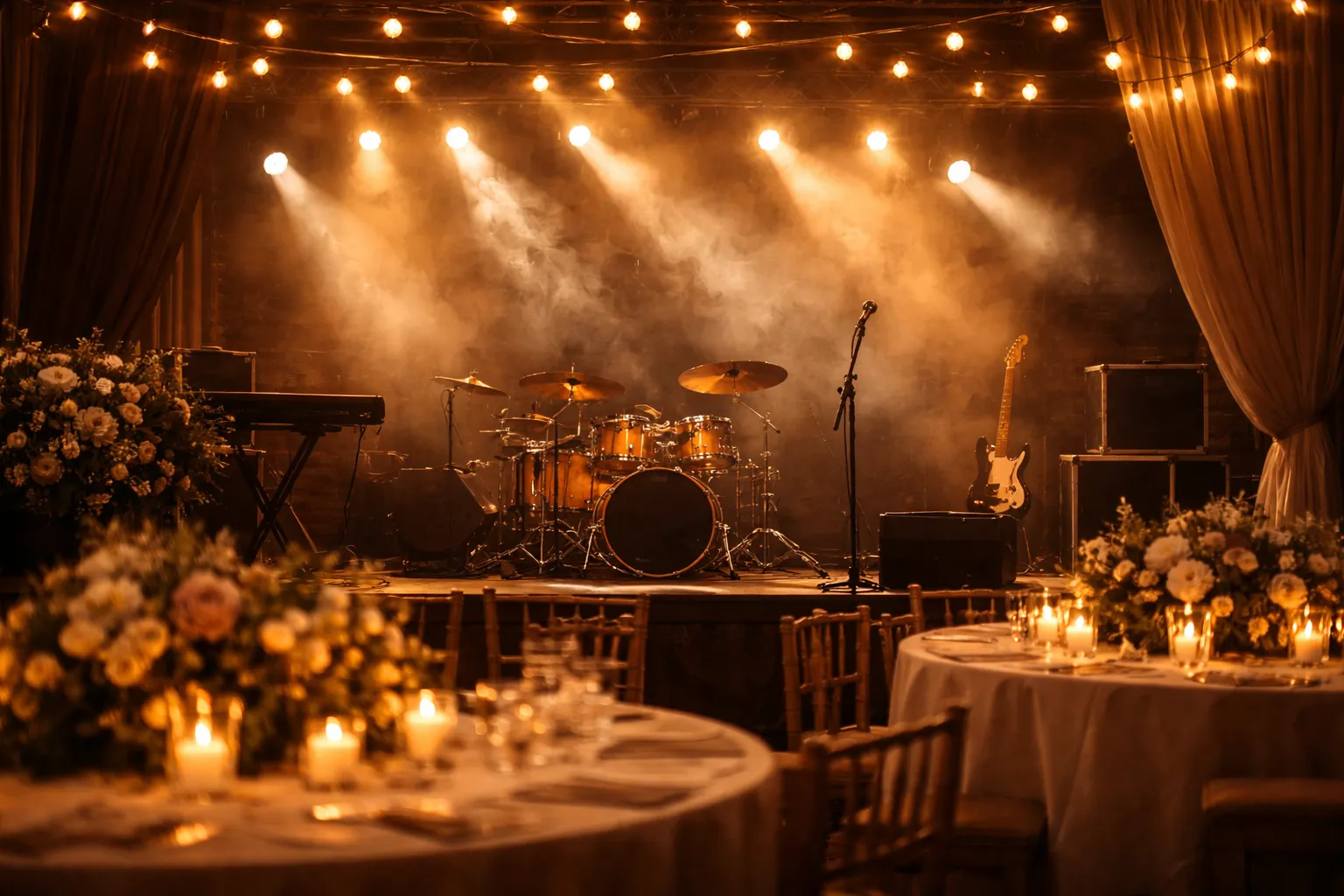
Even the physicallay out of wedding evenings reflects this heritage. Guests often cluster near the band rather than spreading thinly across the space. Chairs are pulled closer. People stand rather than sit. The room begins to resemble a familiar gig environment, even if the walls are lined with portraits or the floor is polished stone.
What emerges is a wedding music culture that feels specific to Nottingham. It is shaped by decades of shared listening and watching, by rooms that reward honesty over display, and by audiences who know when something is being played for them rather than at them. Live bands thrive in that environment not because they dominate the evening, but because they understand how to inhabit it.
More Articles View all+

Why Nottingham Wedding Evenings Favour Live Bands Over Late Night DJs

The Influence of East Midlands Licensing Rules on Wedding Music Timings
