
Why Nottingham Wedding Evenings Favour Live Bands Over Late Night DJs
Message usNottingham weddings tend to make their musical decisions early, often before menus or table plans are finalised. That choice is shaped less by fashion and more by the practical realities of how evenings unfold in a city where venues sit close to residential streets, riverside paths, and long established neighbourhoods. Live bands fit into that environment naturally. They work within defined windows, read rooms quickly, and understand how to build momentum without relying on extended late night schedules that are rarely available outside city centre hotels.
Many Nottingham wedding venues operate with clearly defined finish times, particularly those set within converted halls, listed buildings, or former industrial spaces along the Trent. Live bands are accustomed to working inside those limits. Their sets are planned with an awareness of when energy needs to rise and when it needs to resolve. A band might open the evening with material that allows guests to settle into the room, then gradually tighten the pace as the night progresses. That arc suits local weddings where guests have often travelled in from several directions and are keen to enjoy the evening fully without pushing past curfews.
There is also a cultural expectation at play. Nottingham has a long tradition of live music as a shared experience rather than background noise. From smaller rooms above pubs to mid sized city venues, audiences here are used to watching musicians work in real time. That familiarity carries into weddings. Guests respond to visible performance, eye contact, and the sense that the music is happening only in that room, on that night. Live bands offer a focal point that anchors the evening rather than extending it indefinitely.
Practical considerations reinforce this preference. Nottingham weddings often involve venues with limited loading access or shared spaces that need to be cleared promptly. Live bands are set up to arrive, perform, and depart efficiently. Equipment is scaled to the room, sound levels are controlled carefully, and communication with venue staff is usually straightforward. DJs can of course operate within these constraints, but extended late night sets are less common when licences are tight and neighbours are close.
There is also the matter of guest rhythm. Many Nottingham weddings begin earlier in the day, particularly at venues just outside the city where ceremonies take place midafternoon. By the time evening music begins, guests are ready for something that feels like a moment rather than a marathon. A live band delivering two or three well shaped sets fits that pattern. It allows the evening to peak, taper, and conclude without feeling rushed or overextended.
One local musician summed it up quietly during a conversation between sets. A member of Captain Atlantic once noted that Nottingham crowds tend to commit early. Once the band is on, people decide whether they are in or out, and most choose to bein straight away. That response rewards bands who can establish connection quickly rather than relying on hours of gradual build.
Finally, travel plays a role. Nottingham’s central position means many guests are driving home or catching late trains rather than staying nearby. Weddings here often end decisively rather than drifting into the early hours. Live bands support that decisiveness. They give the evening a clear shape, a shared high point, and a natural conclusion that suits how the region moves.
More Articles View all+
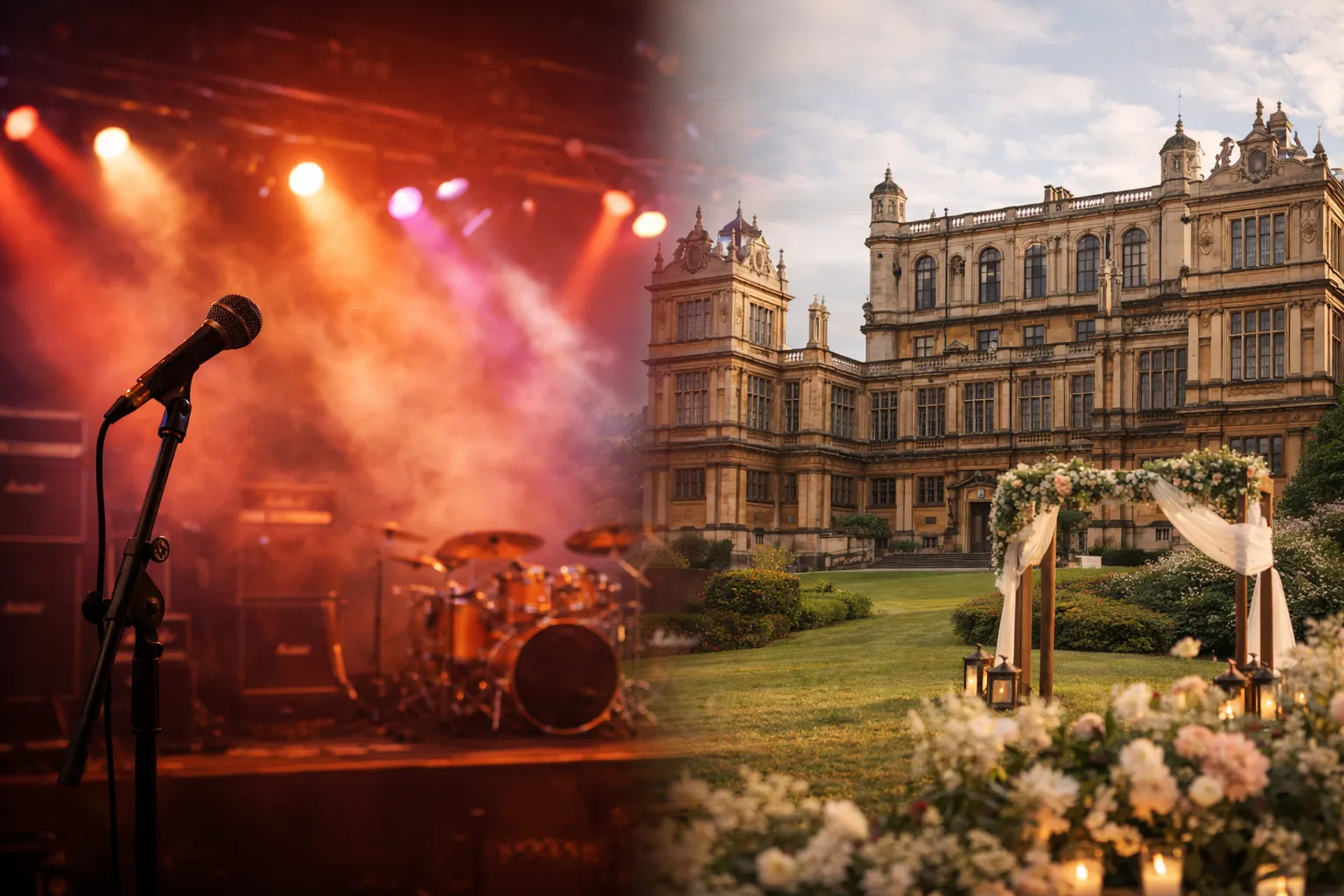

From Rock City to Country Houses How Nottingham’s Live Music History Filters Into Weddings

The Influence of East Midlands Licensing Rules on Wedding Music Timings
